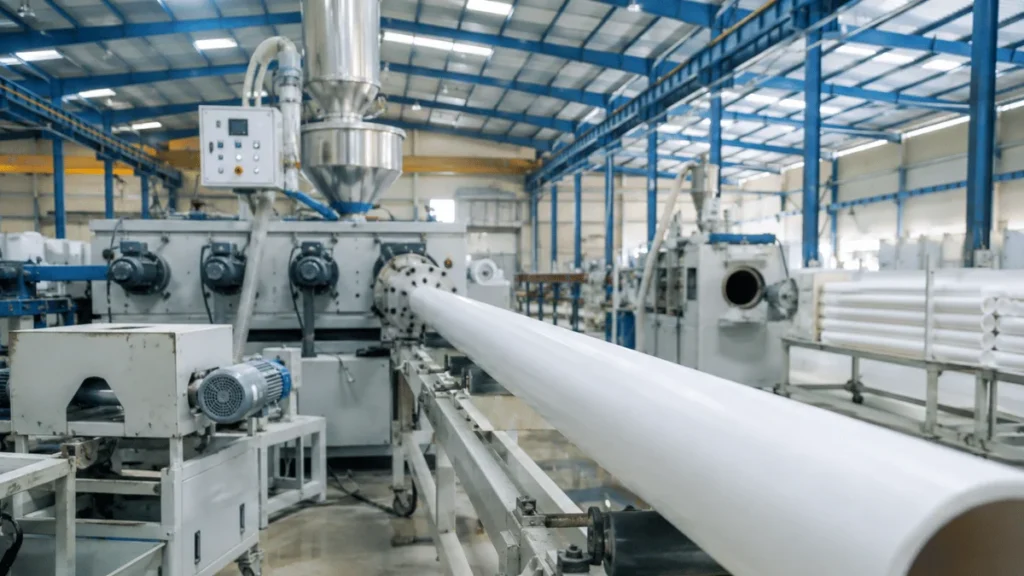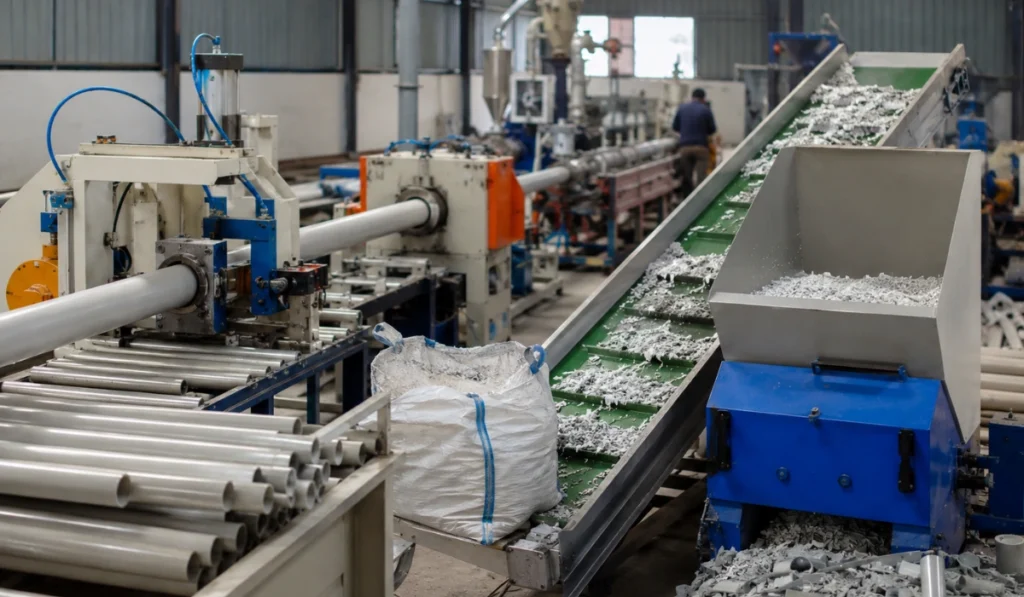

India’s growing investment in housing, commercial construction, irrigation projects, water supply networks, and industrial infrastructure continues to increase the demand for PVC pipes. As a result, many entrepreneurs are exploring PVC pipe manufacturing as a long-term business opportunity. However, one question comes up before making any investment: Is PVC pipe manufacturing profitable?
The answer is yes, but profitability depends on how efficiently the business is planned and managed. Strong demand alone does not guarantee success. Production quality, machinery performance, raw material management, operating costs, and market reach all influence how profitable a manufacturing unit becomes over time.
This guide explains the factors that affect profitability, the investment considerations, and what manufacturers should evaluate before starting a PVC pipe manufacturing business.
Is PVC Pipe Manufacturing a Profitable Business?
PVC pipe manufacturing has the potential to generate sustainable profits because PVC pipes are used across multiple industries and remain in demand throughout the year. Unlike seasonal products, PVC pipes are required for infrastructure development, residential and commercial construction, agriculture, plumbing systems, drainage projects, electrical installations, and industrial applications.
As urbanization and government infrastructure projects continue to expand across India, the need for reliable piping solutions is expected to remain steady. This creates opportunities for manufacturers that can maintain product quality, deliver orders on time, and operate efficiently.
However, profitability is not determined by production volume alone. Manufacturers that effectively control costs, reduce material wastage, and maintain consistent quality are generally better positioned for long-term growth than businesses focused only on increasing output.
What Factors Affect Profitability?
The financial performance of a PVC pipe manufacturing unit depends on several interconnected factors. Understanding these variables before investing helps create realistic business expectations and improves decision-making.
Some of the most important factors include:
- Demand in your target market
- Product category and pipe specifications
- Production capacity
- Quality of raw materials
- Machinery efficiency
- Electricity and utility costs
- Labour productivity
- Factory utilization
- Maintenance expenses
- Distribution and transportation costs
When these areas are managed effectively, manufacturers can improve production efficiency while keeping operating costs under control.
Investment and Returns Go Hand in Hand
Many entrepreneurs focus primarily on the initial machinery cost when evaluating the business. In reality, profitability depends on the complete manufacturing setup rather than a single equipment purchase.
The total investment generally includes factory infrastructure, extrusion machinery, die moulds, auxiliary equipment, electrical installation, cooling systems, raw materials, labour, packaging, logistics, and working capital. Planning these expenses in advance helps avoid unexpected financial pressure during the initial months of operation.
Instead of selecting machinery based only on the lowest purchase price, manufacturers should consider factors such as production stability, energy efficiency, component quality, maintenance requirements, spare-part availability, and technical support. Reliable machinery often reduces breakdowns, improves product consistency, and lowers long-term operating costs.
Industries That Continue to Drive PVC Pipe Demand
One reason PVC pipe manufacturing continues to attract new entrepreneurs is the wide range of industries that depend on these products. Demand is not limited to a single sector, which helps create business opportunities across different markets.
PVC pipes are widely used in:
- Residential and commercial construction
- Agricultural irrigation systems
- Water supply projects
- Sewerage and drainage infrastructure
- Electrical conduit installations
- Borewell and groundwater applications
- Industrial processing plants
- Municipal development projects
Manufacturers serving multiple industries are often better positioned to diversify their customer base and reduce dependence on a single market segment.
Why Efficient Manufacturing Matters
High production volumes do not automatically result in higher profits. A factory producing large quantities with frequent machine stoppages, excessive material wastage, or inconsistent product quality may experience higher operating costs and reduced profitability.
An efficient manufacturing process focuses on producing consistent quality while making the best use of raw materials, electricity, manpower, and machine capacity. Regular maintenance, trained operators, stable production planning, and effective quality control all contribute to better operational performance.
Businesses that prioritize efficiency often experience fewer production disruptions, lower rejection rates, and stronger customer confidence, all of which support long-term profitability.
Common Challenges That Can Affect Profitability
Although PVC pipe manufacturing offers promising opportunities, every business faces operational challenges. Identifying these challenges early allows manufacturers to plan better and reduce unnecessary expenses.
Some common issues include:
- Fluctuating raw material prices
- Rising electricity and fuel costs
- Machine downtime
- Poor production planning
- Product rejection due to quality issues
- Delayed customer payments
- Increasing market competition
- Shortage of skilled machine operators
These challenges do not necessarily reduce profitability, but they require proper planning and efficient management. Businesses that monitor production costs and respond quickly to operational issues are generally more successful over the long term.
How to Improve Profitability in PVC Pipe Manufacturing
Improving profitability is not only about increasing production. It also involves making better use of available resources while maintaining consistent product quality. Even small improvements in efficiency can help reduce operating costs and improve overall business performance.
Manufacturers can strengthen profitability by:
- Producing products based on actual market demand
- Purchasing raw materials from reliable suppliers
- Monitoring electricity and utility consumption
- Reducing production waste and rejected batches
- Following preventive maintenance schedules
- Training machine operators regularly
- Maintaining consistent product quality
- Building strong relationships with distributors and dealers
- Recording production data to identify areas for improvement
Regularly reviewing production performance helps manufacturers identify inefficiencies and make informed business decisions.
Why Choosing the Right Machinery Matters
Machinery is one of the most important long-term investments in a PVC pipe manufacturing unit. Reliable equipment contributes to consistent production, better product quality, lower maintenance costs, and improved operational efficiency.
Before selecting machinery, manufacturers should evaluate factors such as:
- Production capacity
- Energy efficiency
- Build quality
- Ease of operation
- Availability of spare parts
- Technical support
- Installation assistance
- Future expansion capability
- After-sales service
Choosing dependable machinery can reduce unexpected breakdowns and help maintain smooth production over the years.
With more than 50 years of manufacturing experience since 1975, Dass Engineering Private Limited manufactures machinery for PVC, CPVC, HDPE, and PET processing applications. The company offers CAD/CAM-engineered machinery, customized solutions, installation guidance, and reliable after-sales support to help manufacturers establish efficient production facilities.
Is This Business Suitable for New Entrepreneurs?
PVC pipe manufacturing can be a suitable business for entrepreneurs who are prepared to invest in proper planning and quality manufacturing practices. Success depends on understanding market demand, selecting appropriate machinery, maintaining product quality, and managing operating costs efficiently.
New manufacturers do not necessarily need to begin with a large production capacity. Starting with a practical setup that matches market demand often allows businesses to gain operational experience while expanding gradually as customer demand grows.
Steady growth is more achievable when the business expands in line with market demand, available funds, and its ability to maintain reliable production standards.
Conclusion
So, is PVC pipe manufacturing profitable? The answer is yes, provided the business is planned carefully and managed efficiently. Growing demand from construction, agriculture, infrastructure, and industrial sectors continues to create opportunities for manufacturers across India.
Long-term profitability depends on several factors, including market demand, production efficiency, machinery reliability, raw material quality, operating costs, and customer satisfaction. Businesses that focus on consistent quality, efficient operations, and dependable after-sales support are generally better positioned for sustainable growth.
If you are planning to establish a new PVC pipe manufacturing unit or expand an existing facility, selecting machinery that matches your production requirements can improve operational efficiency and support long-term business success. Dass Engineering Private Limited provides machinery solutions designed for PVC, CPVC, HDPE, and PET processing applications, backed by decades of manufacturing experience and technical support.
Read More: How to Start a PVC Manufacturing Company in India
Frequently Asked Questions
1. Is PVC pipe manufacturing profitable in India?
Yes. PVC pipe manufacturing can be profitable due to steady demand from construction, agriculture, water supply, drainage, and industrial sectors. Profitability depends on production efficiency, quality control, operating costs, and market demand.
2. What affects the profitability of a PVC pipe manufacturing business?
Major factors include raw material costs, machinery performance, production capacity, electricity consumption, labour productivity, product quality, maintenance, and the ability to sell products consistently.
3. How can manufacturers improve profitability?
Manufacturers can improve profitability by reducing material wastage, maintaining machinery regularly, producing according to market demand, improving product quality, monitoring production costs, and building a reliable dealer network.
4. Does machinery quality influence business profits?
Yes. Reliable machinery helps maintain consistent production, reduces downtime, lowers maintenance expenses, and improves product quality, all of which contribute to better long-term profitability.
5. Is PVC pipe manufacturing suitable for small-scale businesses?
Yes. Many businesses begin with a production setup that matches their investment capacity and gradually expand as demand increases. Careful planning and efficient operations are often more important than starting with large production volumes.