
Plastic scrap grinding is an important part of many manufacturing operations, particularly in factories that process rejected pipes, plastic offcuts, damaged profiles, and other production waste. The condition of the grinder’s cutting blades can influence how consistently the machine processes material, how much output it produces, and how frequently maintenance is required.
Over time, blades may lose their cutting effectiveness or develop physical damage. Some can be restored through approved sharpening procedures, while others need replacement. Knowing the difference helps manufacturers plan maintenance and avoid unnecessary interruptions.
However, reduced output or unusual machine noise does not automatically mean the blades are worn out. Feeding difficulties, blocked screens, loose components, and other mechanical problems can produce similar symptoms. Before deciding on plastic grinder blade replacement, manufacturers should identify the underlying cause and assess the condition of the complete cutting assembly.
This guide explains the warning signs to watch for, how to distinguish sharpening from replacement, and which maintenance practices can help support consistent grinding performance.
How Do Plastic Grinder Blades Wear Over Time?
Plastic grinder blades repeatedly cut or break down incoming material during operation. Their service life depends on several factors, including the plastic being processed, the presence of contaminants, the grinder’s design, and the conditions under which the machine operates.
Clean plastic scrap can behave differently from material containing metal fragments or abrasive contaminants. Thick sections, irregular shapes, and inconsistent feeding can also affect the demands placed on the cutting mechanism.
Blade wear may develop gradually, making it difficult to recognise through visual observation alone. A grinder can continue running even when its cutting edges have deteriorated enough to affect the quality or consistency of the output.
For this reason, manufacturers should evaluate two things together: the physical condition of the blades and changes in the machine’s performance.
There is no universal replacement interval for every plastic scrap grinder. Maintenance decisions should be based on the manufacturer’s recommendations, inspection findings, material characteristics, and actual operating conditions.
Read This: Before Buying a PVC Scrap Grinder: How to Match Waste Type, Output Size, and Processing Needs
Five Warning Signs That Plastic Grinder Blades May Need Attention
Changes in grinding performance can indicate that the cutting assembly requires inspection. However, these symptoms should be treated as diagnostic clues rather than automatic reasons to replace the blades.
1. The Ground Material Becomes Less Consistent
One possible indication of blade wear is a noticeable change in the size or consistency of the processed plastic. The grinder may produce more oversized pieces, a less uniform particle distribution, or material that no longer meets the requirements of the next processing stage.
Deteriorated cutting edges can reduce the effectiveness of the cutting action. However, the output is also influenced by screen openings, feeding conditions, material characteristics, and the machine’s configuration.
Before replacing the blades, inspect the screen for blockage or damage and check whether the incoming material has changed. If these factors are ruled out, the cutting edges may need closer examination.
Manufacturers should compare the ground material with the required output specification rather than judging performance solely by appearance.
2. The Machine Processes Less Material Than Before
A grinder that previously handled a consistent quantity of scrap may begin producing less material during the same operating period. Worn blades can contribute to this reduction because the machine may require more time to break down the incoming material.
Nevertheless, declining throughput can have several causes. Irregular feeding, changes in scrap dimensions, blocked screens, or mechanical faults may produce similar results.
To investigate the problem, compare current output with previous records using similar material and operating conditions. Record the quantity processed, operating time, interruptions, and any changes in the scrap stream.
If the decline continues after feeding and screen-related issues have been addressed, inspect the cutting assembly according to the manufacturer’s maintenance procedure.
Also Read: The Production Gaps Hidden Between PVC Machine Capacity and Actual Output
3. Motor Load or Electricity Consumption Changes
Unexpected changes in motor load or electricity consumption may indicate that the grinder needs investigation. Depending on the machine design and operating conditions, worn cutting edges can affect the effort required to process material.
A rise in electricity use or motor load alone is insufficient to identify blade wear as the underlying cause. Excessive feeding, material that is unsuitable for the machine, mechanical friction, and bearing problems can also affect the load.
Similarly, worn blades do not always produce an obvious increase in electricity consumption.
Where suitable monitoring equipment is available, compare readings taken under similar operating conditions. Investigate repeated overloads, unusual heating, or other changes before returning the machine to normal operation.
If the grinder exhibits abnormal behaviour, follow the manufacturer’s shutdown and troubleshooting procedures instead of assuming that new blades will solve the problem.
4. Unusual Noise or Vibration Develops
A change in operating sound or vibration can signal a problem with the grinding assembly or another machine component. The problem may stem from worn or broken blades, improperly secured fittings, an unbalanced rotor, deteriorating bearings, or interference between moving parts. These symptoms should not be treated as normal consequences of blade wear. Continuing to operate a machine with suspected mechanical damage may increase the risk of further equipment failure.
If the grinder develops a new metallic noise, significant vibration, or repeated impact sounds, stop it according to the manufacturer’s safety procedure and arrange an appropriate inspection.
Never open the grinding chamber or investigate moving components while the equipment is running. The cause must be identified before deciding whether the blades, rotor, bearings, mounting hardware, or another component requires attention.
You May Like: PVC Resin Price Trend in India 2026: What Pipe Manufacturers Should Know
5. The Blades Show Visible Wear or Damage
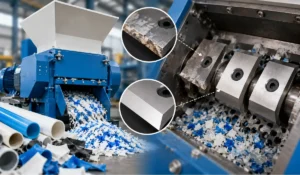
Physical inspection provides important information about blade condition. Rounded cutting edges, chips, cracks, deformation, or uneven wear may indicate that the blades require maintenance or replacement.
The appropriate action depends on the blade design, remaining dimensions, structural condition, and the manufacturer’s acceptance criteria.
During an authorised inspection, check for:
- Cutting edges that have become rounded or visibly worn.
- Cracks, significant chips, or deformation.
- Uneven wear across the cutting surfaces.
- Signs of contact with other machine components.
- Loose or damaged mounting hardware.
- Blade dimensions outside the manufacturer’s permitted limits.
A visual inspection cannot always reveal every defect. Follow the specified inspection procedure and have a qualified person assess any damage that could compromise the integrity of the rotating assembly.
Cracked or structurally damaged blades should not remain in service simply because the grinder still operates.
Also Read: Why PVC Pipe Factories Are Focusing More on Scrap Recovery and Recycling
Plastic Grinder Blade Sharpening vs Replacement: What Is the Difference?
Sharpening and replacement serve different purposes. Sharpening may restore a cutting edge when the blade remains structurally sound and has sufficient material remaining. Replacement is necessary when a blade is damaged, worn beyond its permitted limits, or unsuitable for further use.
The decision should follow the machine manufacturer’s instructions rather than a general rule based on operating hours.
When Is Sharpening Appropriate?
Plastic grinder blade sharpening may be suitable when:
- The cutting edge is dull, but the blade remains structurally sound.
- The blade dimensions remain within the manufacturer’s permitted limits.
- The cutting geometry can be restored to the required specification.
- The manufacturer permits sharpening for that blade design.
Sharpening should be performed using an approved procedure. Improper grinding or changes to the cutting geometry can affect the blade’s performance and suitability for the machine.
Also Read: How Socketing, Slotting, and Scrap Processing Complete a PVC Pipe Production Line
When Should Blades Be Replaced?
Replacement may be necessary when:
- Cracks, serious chips, or deformation are present.
- The blade has worn down to a point where its remaining dimensions fall outside the manufacturer’s approved limits.
- The required cutting geometry cannot be restored.
- Further sharpening would leave insufficient material.
- The manufacturer specifies replacement rather than reconditioning.
Not every blade is designed for repeated sharpening. Some cutting assemblies require particular clearances, mounting arrangements, or edge geometries. Unauthorised modifications can affect performance and safety.
After sharpening or replacement, the cutting assembly must be installed, adjusted, and inspected according to the manufacturer’s procedure. Blade clearance, fastening, and rotor balance should never be set using guessed or generic values.
What Factors Affect Plastic Grinder Blade Life?
Blade life varies considerably between applications. A maintenance interval that works for one factory may not be suitable for another because material characteristics, workload, and machine configurations differ.
Understanding these factors helps manufacturers make better maintenance decisions.
Material characteristics and contamination: Different plastics and scrap dimensions place different demands on the cutting mechanism. Metal fragments and other unwanted contaminants can damage cutting edges and create additional hazards. Inspect incoming material and follow the machine’s permitted feed specifications.
Operating and feeding conditions: Irregular feeding, unsuitable input dimensions, and operation outside the manufacturer’s recommendations can affect the cutting assembly. Operators should follow the specified loading procedure and investigate recurring feeding problems instead of forcing material into the grinder.
Maintenance practices: Infrequent inspections can allow wear or damage to progress unnoticed. A documented inspection routine helps identify changes before they develop into more serious equipment problems.
Useful maintenance records include:
- Operating hours since the last blade inspection.
- Types of material processed and any known contamination.
- Inspection findings and relevant blade measurements.
- Sharpening and replacement dates.
- Changes in throughput, output consistency, or machine behaviour.
- Repairs, adjustments, and recurring faults.
These records help maintenance teams identify patterns and plan inspections around actual operating experience rather than relying entirely on fixed calendar intervals.
Also Read: How to Start a PVC Manufacturing Company in India
Plastic Scrap Grinder Blade Maintenance Checklist
A consistent inspection process helps manufacturers make informed decisions about blade condition. The following checklist is a general planning aid and does not replace the maintenance instructions supplied with the machine.
Before Operation
- Review reports of changes in noise, vibration, output, or machine load.
- Confirm that the feeding arrangement is appropriate for the material.
- Check that guards and required safety devices are in place.
- Follow the manufacturer’s pre-start inspection requirements.
During Scheduled Maintenance
- Isolate the machine from its energy sources and follow the required lockout procedure.
- Inspect blades, mounting hardware, the rotor, and the screen as directed by the manufacturer.
- Check blade dimensions where the maintenance procedure requires measurement.
- Record visible wear, damage, and any findings outside the permitted limits.
- Determine whether sharpening, replacement, or further mechanical investigation is appropriate.
Before Returning the Machine to Service
- Confirm that components have been correctly installed and secured.
- Verify blade clearances and rotor balance where specified.
- Refit all guards and safety devices.
- Complete the manufacturer’s required restart and functional checks.
Blade inspection, removal, sharpening, and installation should be performed by suitably trained personnel. Never reach into the grinding chamber while the equipment is energised or rely solely on the stop button to prevent unexpected movement.
Also Read: Is PVC Pipe Manufacturing Profitable?
How Can Manufacturers Reduce Premature Blade Wear?
Although blade wear cannot be eliminated entirely, appropriate operating and maintenance practices may help prevent avoidable damage.
Start by ensuring that incoming scrap is suitable for the machine. Remove contaminants through an appropriate inspection and separation process, and do not feed material that exceeds the specified limits.
Operators should also report changes in output, sound, and vibration promptly. Investigating the grinder at an early stage may uncover issues such as an obstructed screen, inconsistent material feeding, or another mechanical problem that does not require new blades.
Manufacturers can support more consistent grinding operations by:
- Following the machine’s permitted material and feeding requirements.
- Managing contaminants and keeping the grinding area clean.
- Inspecting blades and related components at the recommended intervals.
- Using approved sharpening and replacement procedures.
- Recording inspections, repairs, and operating changes.
- Training operators to recognise abnormal behaviour and stop equipment safely when necessary.
For manufacturers evaluating equipment from a Top PVC Pipe Machinery Manufacturer in India, maintenance requirements should form part of the machinery-selection process. Alongside production capacity and machine specifications, buyers should examine blade inspection procedures, spare-parts availability, and recommended servicing arrangements. These considerations help factories plan maintenance and manage their plastic scrap grinding operations more effectively.
The objective is not simply to extend blade life. It is to maintain safe, consistent grinding performance while making maintenance decisions based on the blade’s condition and the equipment manufacturer’s guidance.
Frequently Asked Questions
1. How often should plastic grinder blades be replaced?
There is no single replacement interval suitable for every grinder. Blade life depends on the material processed, contamination, operating conditions, blade design, and manufacturer specifications. Use inspection findings and maintenance records to determine when attention is required.
2. Can dull plastic grinder blades be sharpened?
Sometimes. Sharpening may be appropriate when the blade remains structurally sound and within the manufacturer’s permitted dimensions. Cracked, deformed, or excessively worn blades may require replacement.
3. Do worn grinder blades reduce production output?
They can contribute to lower throughput or inconsistent particle size. However, blocked screens, irregular feeding, unsuitable scrap, and mechanical problems can produce similar symptoms. Investigate these possibilities before replacing the blades.
4. Does unusual noise mean the grinder blades need replacement?
Not necessarily. Unusual noise or vibration may result from loose components, rotor imbalance, bearing problems, blade damage, or other mechanical faults. Follow the machine’s safety procedure and arrange an inspection when abnormal behaviour occurs.
5. How can manufacturers decide between sharpening and replacement?
The decision depends on the blade’s condition, remaining dimensions, structural integrity, and the manufacturer’s maintenance criteria. A qualified technician should assess whether reconditioning is permitted or replacement is necessary.
6. What is the most important maintenance practice for plastic scrap grinders?
Follow the manufacturer’s inspection schedule, maintain suitable records, control material contamination, and investigate changes in operating behaviour. Always isolate the equipment safely before inspecting or servicing the cutting assembly.
Conclusion
Plastic grinder blades are important components in scrap-processing operations. Replacing them too early can create unnecessary expense, while continuing to use damaged blades can compromise equipment reliability and safety.
Manufacturers should watch for changes in output consistency, processing throughput, machine behaviour, and visible blade condition. These symptoms can indicate wear, but they can also point to problems elsewhere in the grinding system.
The right decision depends on a proper inspection, the manufacturer’s permitted limits, and the condition of the complete cutting assembly. A blade that remains within acceptable condition limits may be restored through approved sharpening, whereas severe deterioration or damage that compromises its integrity may call for a replacement.
For factories operating plastic scrap grinder machines, a documented maintenance routine, appropriate material preparation, and prompt investigation of abnormal operating conditions can support more reliable processing and better-informed maintenance decisions.